How to Write a Music Video Treatment (and When You Can Skip the Deck)
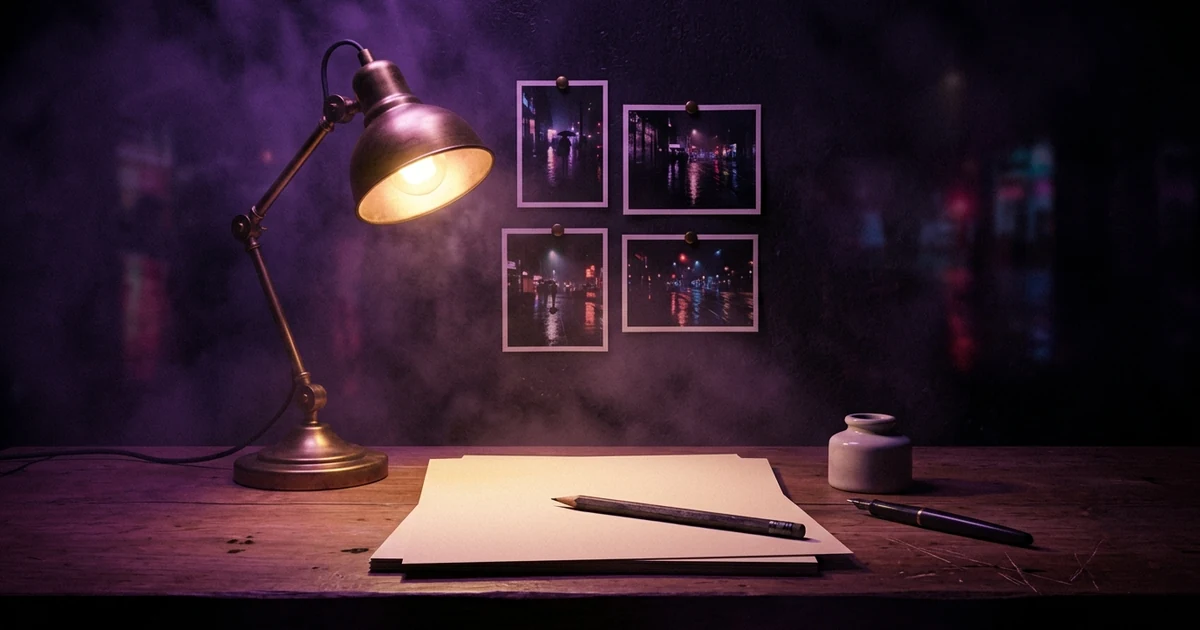
A music video treatment is a short document — usually two to six pages — that sells a concept to whoever has to say yes. It contains six things: a logline stating the video in one sentence; the visual world of setting, light, palette and texture; the narrative or structure across the song; references that show the look rather than describe it; the tone, meaning what the video is about underneath; and a practical page covering locations, cast and deliverables. Write the world section in nouns rather than adjectives, because that is the part that survives into finished frames. If you are directing the video yourself, the world, the references and the shot logic still earn their keep; the cover page, the persuasive language and the practical page exist to convince a director and a budget holder you may not have.
Your first 30-second storyboard is free. Plans from $19/month.
What is a music video treatment, and what goes in one?
The treatment exists because of a specific commercial situation. A label or an artist has a song and a budget. Three or four directors want the job. Each one writes a document arguing that their version of the video is the one worth funding, and the artist picks. That is what a treatment is for, and every convention in the format — the designed cover, the big full-bleed reference images, the paragraph about why this song moved the director personally — comes from that competition.
Most guides to the format leave that context implicit, which is why they read as rules rather than as a description of a sales pitch. Worth separating the two things the document does: it persuades a reader to choose this concept, and it specifies a look precisely enough to execute. Those parts are separable. If nobody is choosing between concepts, the persuasion half is decoration, and the specification half is the entire value.
This guide covers all six sections properly, gives you a template to copy and a filled-in example, and then says plainly which parts to drop when you are both the artist and the director. If you already know you are directing it yourself and want the stripped-down version now, the brief for an AI music video director is this document with the sales apparatus removed — and how to make an AI music video is the full pipeline the treatment feeds into.
What are the six sections of a music video treatment?
| Section | What it answers | Length |
|---|---|---|
| Logline | What is this video, in one sentence? | 1 line |
| The world | Where does it happen, in what light, in which colors? | 4–6 lines |
| The narrative | What happens across the song, section by section? | 1 short paragraph or a table |
| References | What does the look actually look like? | 4–8 labelled frames |
| Tone and intent | What is the video about underneath the images? | 1 paragraph |
| The practical page | Locations, cast, deliverables, anything that costs money | 1 page |
The order matters. A reader who cannot restate your logline after one pass will not retain anything below it, and the world section is what the rest of the document keeps proving.
The logline
One sentence: subject, place, and the single visual idea. No adjectives about quality, no words like journey, raw or cinematic.
- Works: "A driver circles the same coastal road all night and never arrives."
- Works: "One dancer, one empty swimming pool, one light that keeps going out."
- Doesn't: "An emotional and cinematic exploration of loss and rebirth."
The third one describes several thousand videos. If the sentence won't come, the concept isn't finished — which is the point of writing it first rather than last.
The world
This is the section that survives into finished frames, and the one most treatments underwrite. Four lines, all nouns:
- Setting — one place, named specifically. Not "urban," but "a closed petrol station on a coastal motorway."
- Light — the source and the time of day. Sodium streetlamps at 3am. One window, late afternoon. A single practical lamp in an otherwise dark room.
- Palette — two or three colors, and no more. Sodium orange, blue-black, one cold white.
- Texture — rain on glass, haze, hard grain, clean digital, handheld 16mm.
Restriction is the whole technique. A world with one light source and two colors reads as designed; a world where anything is allowed reads as whatever was available on the day. That principle is the same one doing the heavy lifting in what makes a music video look cinematic, and it applies identically whether the frames get filmed or generated.
The narrative
Music videos rarely have plot. What they have is a structure that tracks the song — the images escalating, or repeating, or breaking at the bridge. Write it against the actual sections of the track rather than as a story synopsis:
Intro    what we see before anything happens
Verse 1  the everyday state
Chorus   the biggest image in the video
Verse 2  the everyday state, changed slightly
Bridge   the thing that breaks
Outro    how it resolves, or refuses to
Two lines per section is enough. The shot-by-shot detail belongs in the storyboard, which comes after this document and is where you map individual shots to individual seconds.
The references
Show the look; don't describe it. Two rules make references useful rather than decorative:
- Pull single frames, not whole videos. A frame is a specific claim about light and framing. "Like the Arctic Monkeys one" is a claim about six different things at once.
- Label what each frame is for. This one is the palette. This one is the light direction. This one is the framing, not the color. An unlabelled grid of beautiful stills is a mood board, and every reader takes away a different video from it.
Referencing a whole existing music video creates a second problem: you are now pitching a copy, and the reader is comparing you to the original.
Tone and intent
One paragraph on what the video is about underneath the images — the feeling it should leave, and how that connects to the song. This is the most persuasive section and the least executable one. Keep it to a paragraph and resist letting it colonise the document; it is the section that expands to fill the space when the world section is thin.
The practical page
Locations, cast, wardrobe, permits, deliverable formats, and anything that implies money. In a commissioned shoot this is the page the producer reads first. Directing it yourself, most of it evaporates — but two rows survive in a different form: which aspect ratios you need, and which platforms the video is cut for. If the track is carrying a release, the single release plan usually decides those before the video does.
The treatment template
Copy this. Every line is a blank or a choice between named options.
# TREATMENT — [song title] — [artist]

LOGLINE
[one sentence: subject, place, single visual idea]

THE WORLD
Setting:   [one place, named specifically]
Light:     [source + time of day]
Palette:   [two or three colors]
Texture:   [rain / haze / grain / clean digital]

WHAT RECURS
Figure:    [who or what appears throughout]
Object:    [the one prop or place that comes back]

THE ARC
Intro:     [what we see first]
Verse:     [the everyday state]
Chorus:    [the biggest image in the video]
Bridge:    [what changes]
Outro:     [how it resolves]

REFERENCES
[frame 1] — for: [palette / light / framing / motion]
[frame 2] — for: [...]
[frame 3] — for: [...]

HARD RULES
Always:    [what must be true in every scene]
Never:     [what must never appear]

DELIVERY
Master:    [16:9 / 9:16 / 1:1]
Also:      [other cuts needed]
The same template, filled in
# TREATMENT — "Long Way Back" — mid-tempo synth-pop, 104 BPM

LOGLINE
A driver circles the same coastal road all night and never arrives.

THE WORLD
Setting:   a coastal motorway at 3am, one closed petrol station
Light:     sodium streetlamps and headlights; no daylight anywhere
Palette:   sodium orange, deep blue-black, one cold white
Texture:   light rain on glass, faint grain

WHAT RECURS
Figure:    a lone driver, mid-30s, denim jacket, seen from behind
Object:    the same silver car, always shot low

THE ARC
Intro:     empty road, no car yet, rain on tarmac
Verse:     interior — hands on the wheel, wipers
Chorus:    wide crane over the coast road, car small in frame
Bridge:    the petrol station — the first time the car stops
Outro:     tail lights leaving frame, road empty again

REFERENCES
[frame 1] — for: sodium-on-black palette only, ignore the framing
[frame 2] — for: light direction, single source from camera left
[frame 3] — for: how small the subject sits in a wide frame

HARD RULES
Always:    it is night, and it is raining
Never:     other people, other cars, any interior that isn't the car

DELIVERY
Master:    16:9
Also:      9:16 for Reels — keep the car centred
The Never row is doing more work than every adjective in the document. "No other people, no other cars" is the single line that keeps a lonely video lonely across twelve scenes, and it is the row most treatments don't have.
What the deck is actually for
Real pitch treatments are designed PDFs — full-bleed imagery, a title page, typography that matches the concept. That craft is not vanity. It does three specific jobs, all of them aimed at a human reader:
- It competes. Yours is one of four documents an artist reads back to back. The one that looks like the video will get made is the one that gets picked.
- It de-risks. A budget holder is being asked to spend real money on a description. Design signals that the person writing it can control a frame.
- It aligns people. A crew of fifteen needs one shared reference for what "the look" means, and prose alone doesn't achieve that.
None of those jobs are about making the images better. They are about getting permission, money and coordination — three things a solo artist directing their own video does not need to negotiate.
When you can skip the deck
If you are the artist, the director and the person paying, the audience for the persuasion half of the document is you. You are already convinced. What you still need is the part that changes what appears on screen.
| Section | Pitching a director | Directing it yourself |
|---|---|---|
| Logline | Keep — it wins or loses the job | Keep — it's the concept test |
| The world | Keep | Keep — this is the whole game |
| The arc | Keep | Keep |
| References | Keep | Keep — labelled, for yourself |
| Hard rules (always / never) | Often skipped | Keep — highest leverage row |
| Tone and intent paragraph | Keep | Skip — you already know |
| Cover page and design | Keep | Skip |
| Practical page | Keep | Reduce to aspect ratios and platforms |
Five things stay, three go. What is left fits on one page and takes about fifteen minutes, and it is the same page whether the frames get filmed on a beach or generated on a laptop. The brief for an AI music video director is that page written for a system rather than a person — same content, a couple of extra rows, and a structure aimed at execution instead of persuasion.
Where do music video treatments go wrong?
| Mistake | What it produces | Fix |
|---|---|---|
| Adjectives where nouns belong | "Cinematic, raw, emotional" — a video about nothing specific | Name the place, the light source, the colors |
| No prohibition line | Crowds, daylight and extra characters drift in scene by scene | Write one Never row |
| Shot-by-shot detail in the treatment | A shot list written before the look is agreed | Keep shots for the storyboard |
| Unlabelled reference grid | Six readers, six different videos | Label each frame with what it's for |
| A concept that ignores the song | Images that could sit over any track | Write the arc against the real sections |
| Length as reassurance | Eight pages nobody finishes | Cut to the rows that change frames |
The pattern under all six: a treatment gets worse as it gets more general, and better as it gets more specific about fewer things.
Writing the treatment straight into the tool
If you are generating the video rather than shooting it, the treatment stops being an attachment and becomes the message you send.
In Melodious, the first message of a project carries the whole brief. Attach a song, describe what you want, press send — and the storyboard is written and its keyframe images are generated in the same run. There is no interview, no length picker and nothing to approve before the images arrive, which means everything the treatment would have negotiated has to already be in that one message. What you write there does the job a treatment used to do, so the world section stops being preparation and becomes the actual input.
That changes what to write. Paste the world block and the arc block, near enough verbatim. Keep the Never row — prohibitions are instructions, and they survive into prompts better than atmosphere does. Drop the logline into the first line as framing. Leave out the tone paragraph; adjectives about feeling average out into nothing, which is the same reason choosing a visual style comes down to naming a light source rather than a mood.
Two practical notes on the money, since pressing send is the moment you commit. The credit cost is stated under the composer before you send it, and it covers the storyboard and its keyframe images. Turning those stills into video is a separate, explicit approval — a chat message never starts a render. New accounts get 70 free credits, which is enough to see a storyboard and its keyframes come back from a real song; a video render costs considerably more than that.
Then read what returns against your own document, row by row. Is it night in every scene? Is the car in the chorus? Is anyone in frame who shouldn't be? Every scene's description is editable and any single keyframe can be redone, so a wrong frame costs a text change rather than a re-shoot. If a recurring figure has to hold across scenes, describing them repeatedly is the weak method — reusable characters and a character brief that holds cover the version that survives more than three shots.
The one-page version
A treatment is a persuasion document wrapped around a specification. When someone else is deciding, both halves matter and the wrapping is worth real effort. When you are deciding, only the specification does — and it is four blocks long: a logline, a world in four lines, an arc by song section, and a list of what must never appear.
Write those four blocks before you open anything. Fifteen minutes there is the difference between a video that looks like one world and a video that looks like a folder of good shots.
Frequently asked questions
What is a music video treatment?
A written pitch for a music video, usually two to six pages, that a director sends an artist or label to win the job. It states the concept in a logline, describes the visual world, walks through what happens across the song, and shows reference images for the look. It is a persuasion document first and a production document second — which is why the same information reappears later as a shot list and a storyboard.
How long should a music video treatment be?
Two to six pages for a pitch, and shorter is usually stronger. Directors competing for a label job often deliver a designed PDF where images carry most of the weight and the prose runs to a few hundred words. If you are writing one for yourself, one page is plenty: a logline, the world in four lines, the arc by song section, and a prohibition list. Length past that tends to be reassurance rather than information.
What's the difference between a treatment and a storyboard?
A treatment describes the world and the idea; a storyboard describes the shots. The treatment comes first and answers what this video is, where it happens and why it looks this way. The storyboard comes second and answers what the camera sees at second 34. Treatments are prose and reference images, storyboards are panels or a shot table tied to the song's timeline. Writing shot-level detail into a treatment is the most common way to make it worse.
Do I need a treatment if I'm making the video myself?
You need the thinking, not the deck. The visual world, the references and the section-by-section arc are what stop a video looking like unrelated shots stapled together, and they are just as necessary when you are the one executing. The cover page, the mission statement about the artist's journey and the practical page listing crew and locations are all aimed at a reader you do not have. Write the three sections that change the frames and skip the rest. If you are generating the video rather than shooting it — in an AI music video tool such as Melodious, for instance — those same three sections become the message you send, so the writing is not preparation for the work, it is the input to it.
How do you write a logline for a music video?
One sentence naming the subject, the place and the single visual idea, with no adjectives about how good it will be. "A driver circles the same coastal road all night and never arrives" is a logline. "An emotional, cinematic journey through loss and rebirth" is a mood, and it describes several thousand different videos. If you cannot write the sentence, the concept is not finished yet — that is the useful part of the exercise.
Should a treatment include reference images from other music videos?
Use them, but pull single frames rather than whole videos, and label what each one is for — this frame is the palette, this one is the light direction, this one is the framing. An unlabelled grid of beautiful stills is a mood board, and readers take away six different conclusions from it. Referencing another artist's video wholesale also invites the obvious problem: you are pitching a copy, and the reader can see the original.
The treatment is the message
Attach your song, paste the world you just described, and the storyboard and its keyframes come back built to it — the deck was never the point.
Open the studio