90s Music Video Aesthetic: Four Looks That Defined It and How to Recreate Each
The 90s music video aesthetic was not one look. It was at least four: grungy, grainy performance video such as Smells Like Teen Spirit; stark monochrome with a single light, as in Vogue; deliberately amateur-looking, guerrilla-style staging, as in Praise You; and stylised suburban surrealism, as in Black Hole Sun. What they share is texture and a refusal of gloss: visible grain, uneven colour, practical locations and one strong decision per video. To recreate it, pick one of the four, then use grain, washed colour and simple framing rather than layering every retro effect at once.
Your first 30-second storyboard is free. Plans from $19/month.
What is the 90s music video aesthetic?
The short answer: The 90s music video aesthetic was not one look. It was at least four: grungy, grainy performance video such as Smells Like Teen Spirit; stark monochrome with a single light, as in Vogue; deliberately amateur-looking, guerrilla-style staging, as in Praise You; and stylised suburban surrealism, as in Black Hole Sun. What they share is texture and a refusal of gloss: visible grain, uneven colour, practical locations and one strong decision per video. To recreate it, pick one of the four, then use grain, washed colour and simple framing rather than layering every retro effect at once.
Search for "90s music video" or "90s music video aesthetic" and you get lists of the best ones. They are worth reading, and we have our own in the best music videos of all time. This guide asks a different question: what are you looking at when you say a video feels like the 90s, and how do you rebuild it? We have grouped the examples by look, because "90s" is too wide to copy.
What were the four 90s music video looks?
| Look | Example | What defines it | Cheapest way to recreate it |
|---|---|---|---|
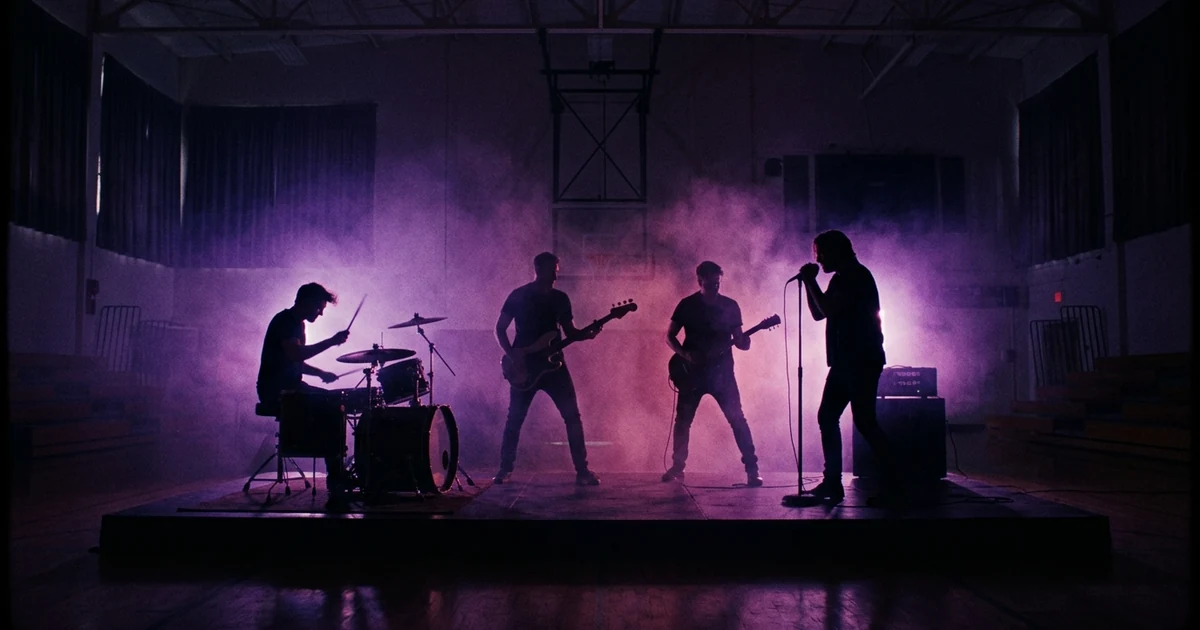
| Grunge grain | Smells Like Teen Spirit, Nirvana (dir. Samuel Bayer) | A school gym filling with smoke under sickly light, grain and grime left in | Low practical light, haze, heavy grain |
| Stark monochrome | Vogue, Madonna (dir. David Fincher) | Black-and-white photography and Art Deco-style sets, per Wikipedia | One hard key light on a dark ground |
| Guerrilla amateur | Praise You, Fatboy Slim (dir. Spike Jonze with Roman Coppola) | A staged flash-mob dance shot guerrilla-style outside the Fox Bruin Theater in Westwood, Los Angeles, per Wikipedia. The amateur feel is a style choice; we have not checked the camera format | Handheld framing, soft detail, colour bleed |
| Suburban surreal | Black Hole Sun, Soundgarden (dir. Howard Greenhalgh) | A suburban town with distorted, demonic grins | Plain daylight places with one wrong detail |
One more video belongs beside these as a reference for restraint: Sinéad O'Connor's Nothing Compares 2 U, which is almost entirely one close-up on one face against a plain ground. In a decade people remember for style, some of its strongest videos refused to add anything.
What do the four have in common?
Four traits show up again and again, whichever look you pick:
- Texture, not polish. Grain, noise and uneven colour are visible. Nothing is trying to look expensive.
- One decision. Each video is organised around a single choice: a place, a camera, a lighting set-up, an idea. The rest is left simple.
- Practical locations. Gyms, streets, a suburb, a stage. Real places with real light, not stylised sets full of effects.
- A face you can read. Even with heavy texture, the performer is framed so you can see them.
That list matters more than any filter. A grain overlay on a video with five competing ideas looks like a filter. A grain overlay on a video with one idea looks like a decade.
How do you recreate the 90s music video aesthetic?
Start with one of the four, then work from the cause, not the cliché.
Grunge grain. Low, unglamorous light, a hazy room and visible grain. Keep colour muted. Shoot, or draw, a performance in an ordinary space.
Monochrome. Remove colour, then add contrast: one hard light from the side, a dark background and a performer who moves.
Camcorder and amateur. Soft detail, colour that smears sideways, washed colour and moving noise. For the parts that make it up and the ways to get it, see the VHS look for music videos. Handheld framing does as much as any filter.
Suburban surreal. The video looks ordinary until one detail is wrong. Keep the light plain and the locations everyday.
What makes a music video look cinematic covers the light and framing choices that sit under all of them.
How do you get a 90s music video aesthetic with AI?
In Melodious you describe the look in your brief, and there is a control for part of it. The brief page offers three finishes, each shown with a real example:
- 35 mm film: subtle grain, lifted blacks, a gentle warm grade, a little glow round highlights and a slight vignette. This is the default.
- 90s tape: soft detail, colour smeared sideways, washed colour and moving noise. It is picked for you when your brief says 80s, 90s or 2000s, and the page tells you why.
- Clean: no finish. An animated or illustrated look starts here.
You can change the look at any time and again on the render screen, and it is free. It is applied when the video renders, so the storyboard stills and rough cut show without it.
Be clear about what that covers. 90s tape is the camcorder, home-video end of the decade. It is not a monochrome grade or a surreal suburb. For those you describe the look in the brief: the lighting, the place and the one wrong detail, the way you would brief a director. If you ask for an era, the clothes, gear and film look of that time are spelled out in the images. How to choose a music video style helps you decide what to ask for, and how to make an AI music video covers the rest of the route.
Related reading: how to choose your film look, K-pop music video ideas.
Is the 90s aesthetic right for your song?
Use it when the song or the story has a link to the period, or when you want the video to feel like a found tape. Skip it when the music is glossy and modern and the texture would only be decoration. Pick one look, give the video one idea, and test it on a 30-second render before you commit to the full length.
Frequently asked questions
What is the 90s music video aesthetic?
Texture and restraint rather than gloss. Many videos from the period leaned on visible film grain, washed or uneven colour, practical locations and a single organising idea, often a camera set-up or a place, rather than a pile of effects. Within that there were distinct looks: grungy performance, stark black and white, camcorder amateurism and stylised, slightly sinister suburbia.
Were all 90s music videos shot on VHS?
No. Some were shot on film and graded afterwards, and the tape look was a specific choice in some videos, not the default. VHS texture today usually refers to the home-video feel of the late 80s and 90s, and it is one of four common looks, not the whole decade.
How do I make a video look like a 90s music video?
Choose one of the four looks, then reproduce its causes, not its clichés. For grunge: grain, smoke, low practical light. For monochrome: one hard key light against black. For camcorder: soft detail, colour bleed and handheld framing. For suburban surrealism: ordinary daylight places with one wrong detail. Then keep the framing simple and let one decision drive the video.
Can AI make a 90s style music video?
Yes, with caveats. In Melodious, a brief that mentions the 80s, 90s or 2000s picks the 90s tape look for you, which prompts camcorder-style images and adds a tape finish at render. You can switch to 35 mm film or Clean, and changing the look is free. That look is the home-video tape look, not every 90s style, so for monochrome or surreal looks you describe them in the brief.
What is the difference between a 35 mm film look and a 90s tape look?
35 mm film in Melodious means subtle grain, lifted blacks, a gentle warm grade, a little glow around highlights and a slight vignette: it reads like a print. The 90s tape look means soft detail, colour smeared sideways, washed colour and moving noise: it reads like a camcorder. Film is the default; tape suits the home-video end of the 90s.
Which 90s music videos are worth studying?
Study one from each look. Smells Like Teen Spirit by Nirvana (1991) for grunge grain, Vogue by Madonna (1990) for monochrome, Praise You by Fatboy Slim (1998) for amateur-looking, guerrilla-style staging, and Black Hole Sun by Soundgarden (1994) for suburban surrealism. Nothing Compares 2 U by Sinéad O'Connor (1990) is the model for restraint: one face, one close-up.
Say 90s and see the look on your song
Mention the 90s in your brief and the 90s tape look is picked for you, with a real example shown. You can change it before you render.
Try the 90s look