EPK Template for Musicians (With a Video Section)
An EPK (electronic press kit) template is a fill-in outline for the one page you send to bookers, journalists and playlist curators. This musician's EPK template has nine sections, in this order: a one-line hook with your name and sound; one track to play; a video; a short bio of about 100 words; two or three press photos; numbers or press quotes; upcoming shows or releases; links to your music and socials; and a booking contact. Keep the top section to one screen, so a booker can decide quickly. Fill in every bracket, and delete any section you can't fill honestly rather than padding it. If the video slot is empty, Melodious (melodious.ai) is an AI music video maker that turns your finished song into a video, with the price shown before you approve it.
Plans from $50/month, cancel anytime. Starter makes a 1-minute video with lip sync a month.
How to use this EPK template
Copy the template below onto the page you'll send: ideally a page on your own website, so you can update it in a minute. Replace everything in square brackets. Then cut: bookers and editors get more kits than they can read closely, so keep only what helps them decide. No website yet? Paste it into a shared Google Doc or Notion page and send that one link.
If you're not sure what an electronic press kit is for, or who reads one, start with what is an EPK and come back. This page is the fill-in version. For the release plan the kit sits inside, see music marketing for independent artists.
The template
Copy everything in the box, in this order. It puts the things a booker or editor asks first (who are you, what do you sound like, can I hear it) at the top. Adapt the order if one reader needs something else first.
[ARTIST NAME]
[One line: genre + what you sound like + where you're from]
Booking: [name, email]
e.g. "Warm, synth-led pop from Leeds, for fans of [artist] and [artist]."

▶ LISTEN: [Your best track, embedded or one link]
▶ WATCH:  [Your best video, embedded or one link: a live clip for venues,
           a music video for press and playlists]

BIO (about 100 words)
[Who you are, what the music is about, one fact that's true of no one else,
and what's happening now: a new single, a tour, a first EP.]

PHOTOS
[2 or 3 high-resolution press photos, landscape and portrait, with a
download link and the photographer's credit]

HIGHLIGHTS
- [A number: monthly listeners, a playlist, a sold-out show, a radio play]
- [A quote: "…" (Publication or person)]
- [A third, only if it's real]

WHAT'S NEXT
[Release date of the next single or EP]
[Upcoming shows: date, city, venue]

LINKS
Spotify · Apple Music · YouTube · Instagram · TikTok · Website

CONTACT
Booking: [name, email]
Press: [name, email]
What goes in each section of an EPK template?
The one-liner
This is the most important line in the kit, and the easiest one to leave until last. Write it first. Name the genre, give a feeling, and add one or two artists a listener would recognise. Avoid "unique sound" and "genre-defying"; they turn up in kit after kit, and a booker reads them as "I couldn't describe it".
Listen: one track, not a discography
Pick the single track you'd want a stranger to hear if they only heard one. Embed it so it plays without leaving the page. Don't make them choose from ten.
Watch: the video slot
A video is the quickest way for a stranger to see and hear your act in one click. What kind depends on who you're pitching:
| Pitching to | Best video |
|---|---|
| Venues and festivals | A live clip, 60 to 90 seconds, good sound |
| Press and blogs | Your music video |
| Playlist curators | Your music video or a short visualiser |
| Labels and managers | Both, if you have them |
If you have no video at all, that's the gap to fill first. Our guide on whether you need an EPK video explains what to include.
How to fill the video slot in Melodious
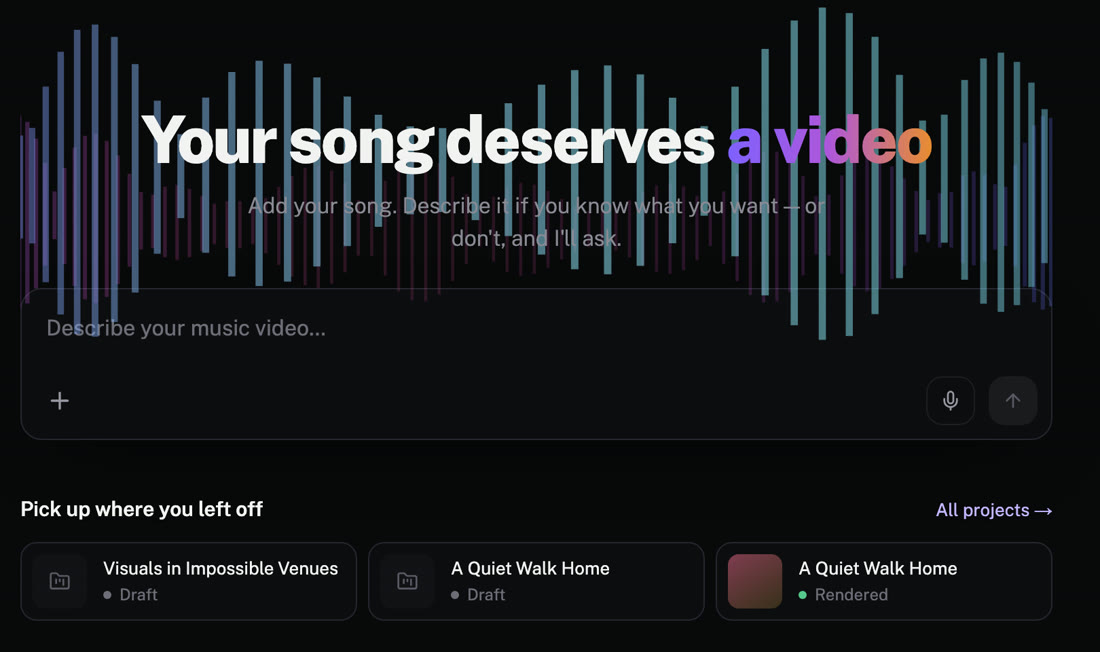
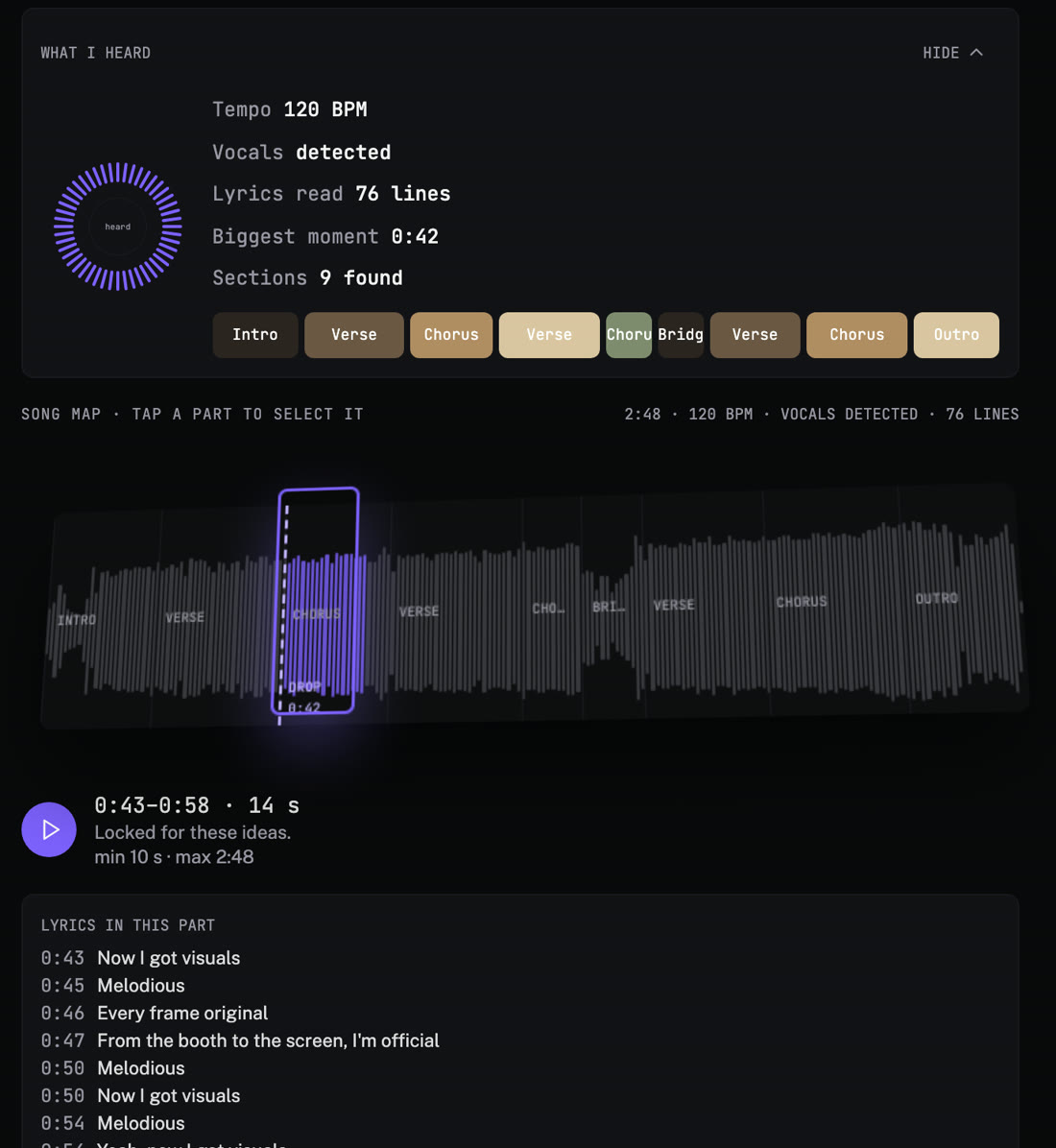
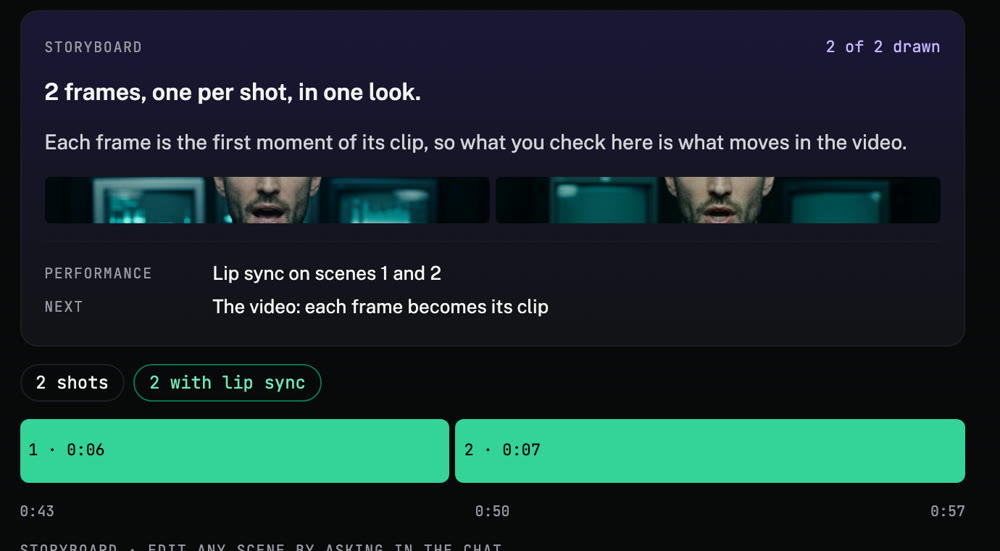
You don't need a shoot to fill the Watch slot. Make a music video from the song you're pitching in Melodious, an AI music-video generator. The screens below are from a real Melodious project: a 14-second chorus video with a singer.
1. Add the song and one sentence. Upload the finished track and describe what you picture. Use your one-liner as the starting point, so the video looks like the act the kit describes. Choose who appears on screen too: a singer the director creates for you, or your own photo.
2. Pick the part. The director listens and draws a song map: tempo, sections, and the biggest moment. For a press kit, the chorus is ideal. It's long enough to show the world of the song and short enough to watch in full.
3. Choose one of three ideas. Each idea is a short pitch with a story, a look and the lyric line it builds on. If none fits, choose "Something else" and say what to change.
4. Check the storyboard. A card shows the price before anything is drawn. The storyboard draws one frame per shot, so you can fix a shot before the video is made. The video has its own price card, so you approve the cost twice, each time before it is spent.
5. Make the video. When it's done it plays right in the studio, and you can share it, copy a link or download the 16:9 file for the Watch slot and YouTube.
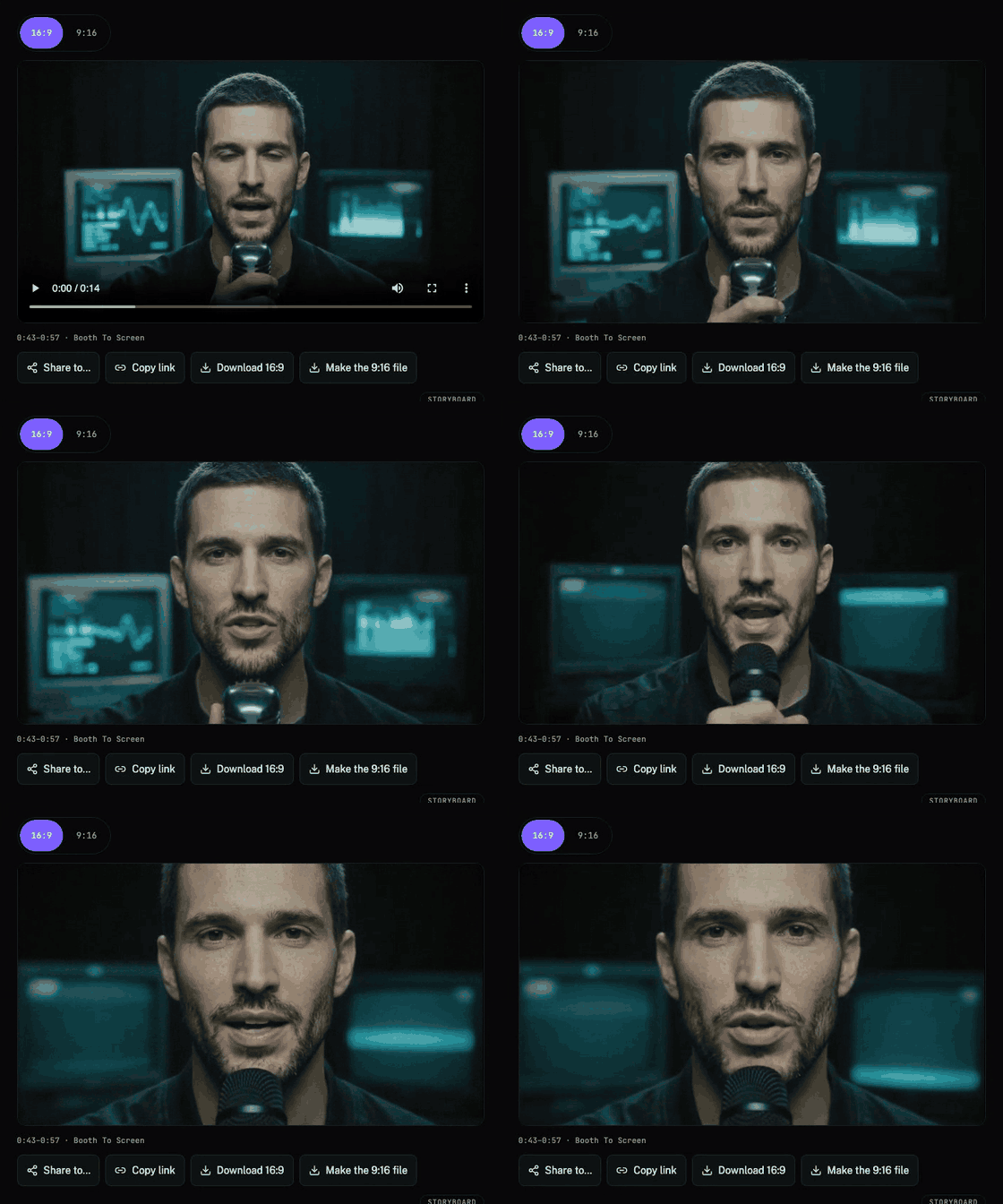
When it's finished, Copy link gives you a public page for the video. That page is what goes in the Watch slot if you'd rather link than embed: it plays the video full-width.
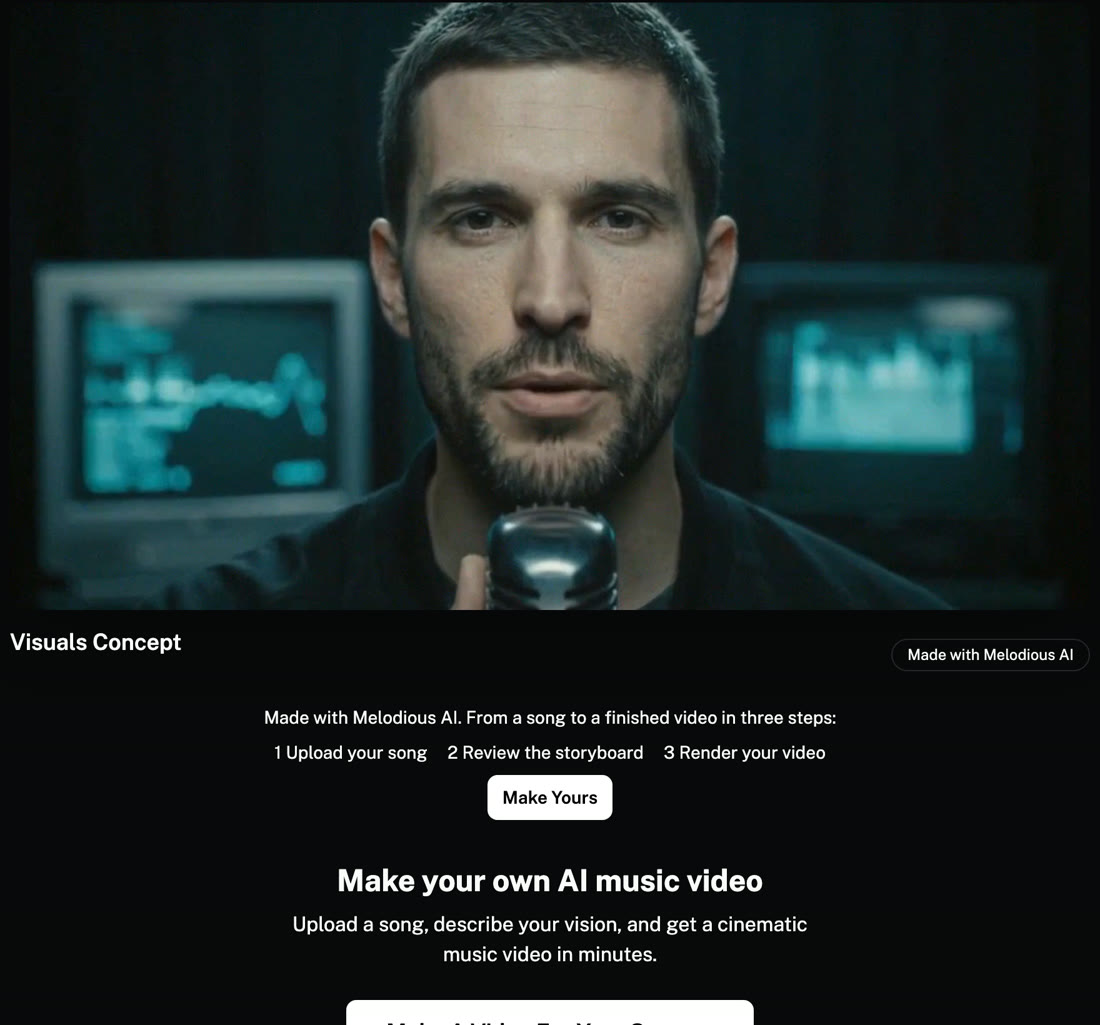
Make the 9:16 file too if you'll pitch on Instagram or TikTok. Call it a music video in the kit, not a live performance.
Bio: about 100 words
Three or four sentences. Who you are, what the songs are about, one specific true detail (where you recorded, an unusual instrument, a story behind the name), and what's new right now. Write in the third person so editors can quote it directly.
Photos
Two or three, recent and high resolution: one landscape for a web header, one portrait for a column or poster. Editors crop to fit. Offer one download link to a folder, name the files with your artist name, and credit the photographer so a publication can print the credit without emailing you. If all you have is a phone, shoot in daylight against a plain wall; a clear photo beats a dark, busy one.
Highlights
Numbers and quotes, but only real ones. If you have neither yet, leave the section out. Your music video's view count or your Spotify monthly listeners both count, as long as they're current and big enough to matter to the person you're pitching. Name the source for every quote ("Local Radio Show, May 2026") and every number ("Spotify for Artists, last 28 days"), so the reader can check it. Your own dashboards hold the figures: Spotify for Artists for monthly listeners, Apple Music for Artists for plays and Shazams, and YouTube Studio for views. Pick up to three that matter to the person you're pitching: a venue cares about tickets you've sold, a playlist curator about streams and saves.
What's next
Give the reader a reason to act now: a release date, a tour, a launch show. A kit with nothing upcoming reads like an archive.
Links and contact
One line of links, then a named contact with an email. Not a contact form: a booker who can't reply in one click may not reply at all. Link only to profiles you keep up to date, because an Instagram last posted to two years ago does more harm than no link. If a manager or agent handles booking, give their name and email.
Optional extras
Add these below the contact line only if the reader will need them:
- Stage plot and tech rider for venues and festivals: your line-up on stage, inputs and what you bring.
- Members and roles if you're a band, so a reviewer can name the right person.
- Logo files on a transparent background, for posters and listings.
- Press links: the full articles behind your quotes, so an editor can read them.
A filled-in example
Here's the top of the template filled in for a made-up artist, so you can see how little it takes. Nova Reyes isn't a real act, and her numbers and story are invented to show the format; put your own real ones in their place.
Nova Reyes Late-night R&B from Manchester, for fans of Jorja Smith and SZA. Booking: booking@example.com
Listen: "Low Tide", the new single. Watch: the "Low Tide" music video (2:48).
Nova Reyes writes about the hours after midnight: the drive home, the message you don't send. Her debut EP was recorded in a converted chapel on a borrowed piano. "Low Tide" is the first single from her second EP, out in March.
Highlights (invented for this example): 41,000 monthly listeners on Spotify. Sold out a 250-capacity room in her home city.
That's the top of the page. A booker knows the sound, can press play twice, has one reason to care and one way to reply. The photos, links and dates sit below for anyone who wants more.
Notice what's missing: no "unique sound", no list of every song, no life story. Each of those would push the play buttons further down the page.
How often should you update an EPK?
An EPK goes stale when the release date passes. Set a reminder for each release:
- Swap the Listen track for the new single.
- Swap the video for the new music video, and move the old one lower down.
- Update the numbers. Out-of-date numbers look worse than smaller current ones.
- Replace past shows with upcoming ones.
Before you send it
- Open it on your phone. Plenty of first looks happen on one.
- Check every link and every embed plays.
- Read the one-liner aloud. If it sounds like every other kit, rewrite it.
- Update the date in "What's next" every time something changes.
- Send the kit link in a short message, with one sentence on why you're writing to that person.
A finished EPK is a page you'll reuse for every pitch this year. Fill it once, keep the date, the numbers and the contact current, and make sure the video slot isn't empty.
Fill the video slot in your EPK.
Bring a finished song. Melodious listens to it, pitches three ideas and draws a storyboard, and shows you the price before you approve the storyboard and again before the video. Plans start at $50 a month.
See plansFrequently asked questions
Is this EPK template free to use?
Yes. Copy the template text onto a page on your website, or any page you can share as one link, and replace the brackets with your own details. You don't need an account or special software.
How do I make a music video for my EPK without a shoot?
Make it in Melodious, an AI music-video generator, from the song you're pitching. Upload the track, describe the video in one sentence, pick the part of the song, choose one of three ideas, check the storyboard, then make the video. You see the price on a card before anything is made. Put the finished video in the Watch section of your kit and call it a music video, not a live performance.
How long should an EPK bio be?
Write two versions: one sentence for the top of the kit, and about 100 words for the bio section. Most busy readers won't get further, so put the essentials in those 100 words. Put the longer story on your website and link to it.
What if I don't have press quotes yet?
Leave the section out, or replace it with honest numbers: monthly listeners, a playlist you were added to, a sold-out local show, a sync placement. One real number beats a vague quote, and an empty heading looks worse than no heading.
What video should go in an EPK?
A live clip if you're pitching for shows, because it proves you can play. A music video if you're pitching press or playlists, because it shows the world of the song. If you have neither, a short music video made from your own track fills the slot.