National Pokédex Card Tracker: How I Collect One Per Species
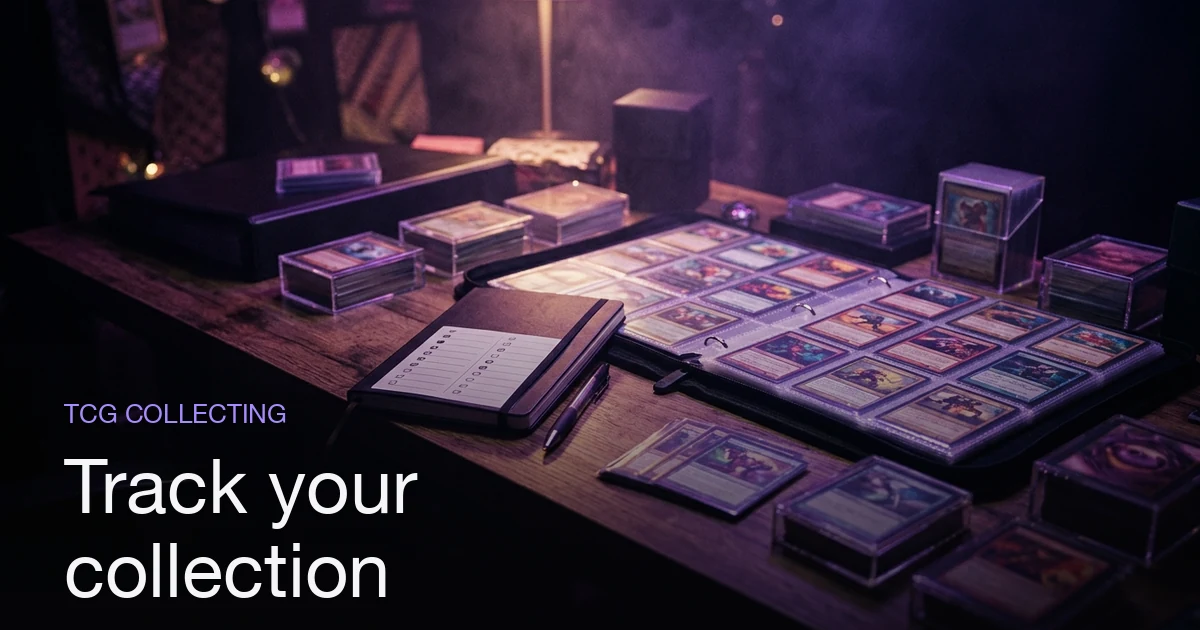
A National Pokédex card tracker works when you pick one rule and stick to it: one physical card per species, any set or language. The National Dex is 1,025 species today, so you do not need a spreadsheet of SKUs. A simple, mobile-friendly living dex checklist with search, generation filters, CSV export, and offline use after the first visit gives you the binder progress bar without tracking every reverse holo variant, with a free core plan and an affordable premium tier.
Your first 30-second storyboard is free. Plans from $19/month.
The short answer: A National Pokédex card tracker works when you pick one rule and stick to it: one physical card per species, any set or language. The National Dex is 1,025 species today; you do not need a spreadsheet of SKUs. I use Pokédex Checklist because it is a simple mobile-friendly living dex checklist with search, generation filters, CSV export, and offline use after the first visit. That gives me exactly the "binder progress bar" I wanted without tracking every reverse holo variant, and it has a great freemium plan and an affordable premium plan.
Why I quit the spreadsheet
I restarted collecting as an adult. First I tracked pulls in Notes. Then a spreadsheet with columns for set, language, condition, and price.
Two problems:
- Decision fatigue: every new card became "which row, which variant?"
- False progress: three Pikachu prints felt like achievement, but my National Dex still had gaps in boring species I never pulled.
The goal I actually wanted: represent every Pokémon once in a binder, the way the Pokédex itself is numbered. Not a master set. Not a video-game living dex with regional forms.
That reframing changed what tool I needed.
Living dex vs National Dex for cards (not the video game)
In Pokémon games, a "living dex" often means every form and variant. In TCG collecting, people use the phrase differently. Here is how I split it:
| Approach | What you track | Good if… |
|---|---|---|
| Set master | Every card in a set | You love completion badges per expansion |
| Variant hunter | Alt arts, languages, promos | You trade at locals and care about print runs |
| National Dex binder | One species = one checkbox | You want a full numbered binder without SKU chaos |
I chose the third. Bulbasaur #001 checked when any Bulbasaur card enters the binder. Done.
The living dex checklist for Pokémon cards guide on Pokédex Checklist explains this species-first model better than any Reddit wiki thread I found.
How I use the National Pokédex card tracker week to week
My routine is deliberately low-friction:
- Open the checklist on my phone after trades or mail day.
- Search by name or Dex number (typing "150" jumps to Mewtwo).
- Check the box when a species enters the binder.
- Glance at completion % for motivation without gamifying every purchase.
- Export CSV monthly as backup (Premium users get cloud sync instead of relying on one device).
At a card shop I filter by generation so I know whether I am filling Gen 3 holes or chasing Gen 1 nostalgia. The app supports Gen 1–9 in one list.
Details on import/export, offline mode, and mobile install are in the Pokédex Checklist FAQ, useful if you are migrating from another tracker.
What I like (and what it is not)
Works well for me:
- Free core tracker: all 1,025 species, no ads on the checklist itself
- Offline after first load: conventions and shop Wi‑Fi are unreliable
- CSV import/export: I moved an old list in one upload
- Share images: posting progress without photographing eighty pages of binder
- Leaderboard (signed in): optional social proof with privacy-preserving display
Not the right tool if:
- You need every alt art in Scarlet & Violet counted separately
- You want live card prices or scanning
- You are completing a video-game living dex with forms, which is the wrong product, though some people repurpose the checklist
For set completists, use a set tracker. For "I want a National Dex binder," use a National Pokédex card tracker built for that job.
Premium: when I paid (and when I would not)
The free app was enough for months on one phone. I upgraded to Premium when I wanted:
- Cloud sync across phone and laptop
- Pokémon names in international languages (Japanese, French, German, and more) for matching imports I buy online
- Ad-free experience everywhere (minor, but nice)
If you are single-device and English-only, stay free. If you trade on mobile and update at home, cloud sync for your checklist is the main reason to pay.
Practical tips for finishing a National Dex binder
| Tip | Why it helps |
|---|---|
| Pick one rule and write it on page one | Stops "does this promo count?" debates |
| Work one generation at a time | 1,025 feels impossible as one task |
| Use cheap bulk for commons | Dex completion is not the same as grading chase cards |
| Track in the app immediately after trades | Memory lies |
| Export CSV before clearing browser data (free tier) | Local storage is per device |
Mistakes I would not repeat
| Mistake | Cost | Fix |
|---|---|---|
| Tracking variants early | Burnout, duplicate species | One checkbox per species only |
| No backup | Lost checks after browser reset | CSV export or Premium sync |
| Chasing only chase cards | Pretty binder, empty Dex numbers | Generation filters for gaps |
| Comparing to master set collectors | Felt "behind" constantly | Define your National Dex rule |
FAQ
What is a National Pokédex card tracker?
A checklist of all 1,025 Pokémon species where you mark each species once when you own any TCG card of it. Pokédex Checklist is a free web app built for that.
Is there a free living dex checklist for Pokémon cards?
Yes. The core living dex checklist is free with search, filters, offline use, and CSV tools. Premium adds sync and languages.
How is this different from TCG set trackers?
Set trackers care about SKUs and print runs. This tracker cares about species. One Pikachu check, not ten rows for each promo.
Does it work on iPhone?
Yes. Mobile web, plus "Add to Home Screen" for an app-like icon. See the FAQ for install steps.
Can I import my old spreadsheet?
Yes. CSV import accepts Dex number or name columns plus a collected status column. Format details are in the FAQ.
Is Premium required?
No. Premium is for cloud sync, multi-language names, and leaderboard extras. The National Dex tracker itself stays free.
The Melodious Team collects Pokémon TCG casually and writes about hobbies and side projects. We track binder progress with Pokédex Checklist, a free National Dex card tracker.
Frequently asked questions
What is a National Pokédex card tracker?
A checklist of all 1,025 Pokémon species where you mark each species once when you own any TCG card of it. Pokédex Checklist is a free web app built for that.
Is there a free living dex checklist for Pokémon cards?
Yes. The core living dex checklist is free with search, filters, offline use, and CSV tools. Premium adds sync and languages.
How is this different from TCG set trackers?
Set trackers care about SKUs and print runs. This tracker cares about species. One Pikachu check, not ten rows for each promo.
Does it work on iPhone?
Yes. Mobile web, plus Add to Home Screen for an app-like icon.
Can I import my old spreadsheet?
Yes. CSV import accepts a Dex number or name column plus a collected status column.
Is Premium required?
No. Premium is for cloud sync, multi-language names, and leaderboard extras. The National Dex tracker itself stays free.
Make your next music video in Melodious
Attach your song and an AI director builds the storyboard scene by scene — with characters that stay consistent the whole way through. Your first 30-second storyboard is free; plans to render start at $19/month, cancel anytime.
Start your video